Learning for Leaders: 5 Simple Ways to Embed Learning into your Demanding Schedule

Like most leaders, I’m very busy. My role as the CEO of a start-up manufacturing company requires a great deal of time and effort. I’m at our manufacturing plant for 9-10 hours a day and I commute an hour each way. I also work 2-3 hours at home each day. In total, I spend 13-15 hours working or commuting. During the week, I don’t have a lot of spare time.

I also know that to be an effective leader, I need to continue to learn and grow. I need to expose myself to the latest business books and thoughts on leadership. I need to understand new concepts and think about how they can help my organization and my ability to motivate my team. The problem is that there isn’t a lot of extra time for learning.

To overcome this challenge, I have incorporated some simple techniques to embed learning in my day. These small changes to my schedule have allowed me to be exposed to a variety of leadership and business topics while still keeping up with a demanding schedule.

I have used these 5 techniques for the past few years with great effect.

Keep a commonplace notebook. This is probably the most important change I made in my daily routine. The idea is to keep a simple notebook of all the things you are learning or various ideas you have. The concept of keeping a commonplace notebook comes from the education community. The notebook is used to write down quotes, concepts, thoughts, ideas, books, websites or anything else you come across in the daily activities that you want to remember. This is not a to-do list but a central place to document ideas and important concepts you’re being exposed to. This is a technique that Richard Branson credits to his success as a leader. I use a simple Moleskin notebook for my commonplace book.

“if you don’t write your ideas down, they could leave your head before you even leave the room.” Richard Branson

Listen to books on Audible. Leaders should be readers but finding the quiet time to read a book is often difficult. I use Audible to listen to books while I’m driving or relaxing. For a monthly fee, you get one book a month to listen to. In a year, you can be exposed to 12 top business books without altering your busy schedule. Here are some of the books I have been listening to.

Listen to podcasts. Podcasts are another great way to be exposed to authors and thought-leaders without impacting your calendar. When I’m not listening to books, I will listen to one of twenty different podcasts I subscribe to. I listen to a variety of leadership and business podcasts but I will sometimes explore other unusual and interesting topics as well. 99% Invisible is probably one of my favorite non-business podcasts.

Use Twitter as a learning platform. Social media can be a time killer if used incorrectly but it can also be educational. The key is in how it is used. I use my Twitter account as a learning tool. I follow business leaders, authors, leadership writers, entrepreneurs and business news. In a quick glance of my timeline, I can see what’s happening in the world of leadership and business. I can also interact with people and further develop my thoughts on a subject.

Set up an RSS reader. There is so much written each day on the subject of business and leadership, there is no way to read it all. One tool I like to use is an RSS Reader. These readers make it easy to follow what’s happening on a variety of websites and blogs. In one glance, you can get a summary of articles that you might be interested in. This saves you the time of having to visit each site individually. You can even add my blog to your RSS Reader.

Leadership is demanding and your schedule is not likely to get any easier. Don’t put off increasing your knowledge because you’re busy. These five simple techniques will allow you to embed learning into your daily routine. The most important tool, however, is the commonplace notebook. This is where all your thoughts, ideas and key lessons are written down. Applying the ideas from your commonplace book will make you a more educated and effective leader.

Solitude: 5 Reasons Why Leaders Need Time Alone

I had a lot of things on my mind. Our start-up company was growing fast but I felt there was more we could be doing. As CEO, I needed time to think, but with so many tasks that had to be done each day, I had a hard time focusing. I felt that if I stopped working, something would get missed. It seemed like taking the time to work out my thoughts was a luxury I couldn’t afford.

One morning, as I was preparing the list of actions that had to get done that day, I couldn’t ignore the noise in my head any longer. I knew I needed to get away from my desk and think. I found a quiet spot in the back of our warehouse and I set up a cheap folding table and chair.

With just a notebook, a pen and a few hours of quiet contemplation, I was able to establish a new direction for our young company. I wrote these questions down. Why do customers buy from us? What makes us special? How do we embed that in the culture? How do we tell other customers about us? The outcome of that brainstorming session led to a new way to focus and market our company. The result has been increased sales and market exposure.

We live in a connected world where leaders are expected to be accessible at all times. This often results in leaders being too busy and distracted to think. Authors, Raymond M. Kethledge and Mike Erwin, remind us that great leaders seek out time to be alone. In their book, Lead Yourself First: Inspiring Leadership Through Solitude, Kethledge and Erwin detail dozens of stories of contemporary and historical leaders who used solitude to become more effective and impactful.

The authors describe five ways solitude can help leaders:

Clarity. As in my case, quiet contemplation can help a leader make sense of a lot of information. Sitting quietly and thinking through complex issues can often lead to breakthrough moments. Dwight D. Eisenhower found clarity in the weeks leading up to the D-Day invasion by spending hours alone in his tent. The solitude helped him realize that the airborne operation was the key to success on Utah beach.

Creativity. Leaders need time to imagine and create a vision for the future. Walt Disney famously created a drawing in 1957 which detailed a vision for his fledgling company. That vision, which has been fully realized today, has resulted in a company that is worth more than $164 billion.

Perspective. The daily demands on a leader are primarily focused on the short term. These are urgent tasks that must be accomplished to keep the organization running. But, spending time alone, allows leaders to see a different perspective. It allows leaders to consider the bigger picture, to assess progress and to establish a new direction.

Emotional balance. Leaders use solitude to step away from their teams to deal with their own personal emotions. Leading an organization is stressful. Leaders can get angry, frustrated and impatient. Acting on those emotions is bad for business. Solitude can be used to sort out those emotions in private and respond properly.

Moral courage. Leaders need to make the tough decisions that often affect people’s lives in a significant way. Solitude can be used to find the courage to face these difficult challenges. In the early days of the civil rights movement, Dr. Martin Luther King Jr. used time alone in prayer and quiet contemplation, to determine if he would lead this important crusade. It was during this time that his inner voice told him to, “Stand up for righteousness. Stand up for justice. Stand up for truth.”

As a leader, it is often hard to focus. With so many issues requiring your attention, it’s difficult to stay ahead of the demand for your time. It’s becoming even more challenging to unplug and be alone in an increasingly connected world where leaders are expected to be accessible around the clock. While it is important to be present as a leader, it is also important to find time to be alone. Solitude is necessary to be a great leader. Time alone will help you find clarity and be creative. It will help you seek courage and balance. Solitude will give you a chance to see your situation from a new perspective. Don’t be afraid to step away from the action and spend time by yourself. It’s an important part of a leader’s job.

The Strenuous Life: 3 Entrepreneurial Takeaways from Theodore Roosevelt’s Famed Speech

When we started our company, we didn’t have an office. It was still under construction. Our landlord gave us a dozen old desks that we set up in the corner of our factory as a short-term workspace. Because of construction delays, we were in the temporary location for more than a year.

The factory had air conditioning but it was always hot in the summer and cold in the winter. The humidity curled our papers and jammed our printers. It was an open office environment, so we were constantly being disrupted by phone calls, discussions and various debates. The factory equipment was an unceasing source of noise as well. In that first year, we made a lot of “friends.” We were visited by ants, spiders, flies and the occasional mouse. It was not an ideal work environment but we managed to get by.

When the construction was finally complete and we moved into our new offices, there was almost a sadness in our team. We had worked together in less than ideal conditions and we had come to enjoy the experience. We appreciated the strenuous life of a start-up company.

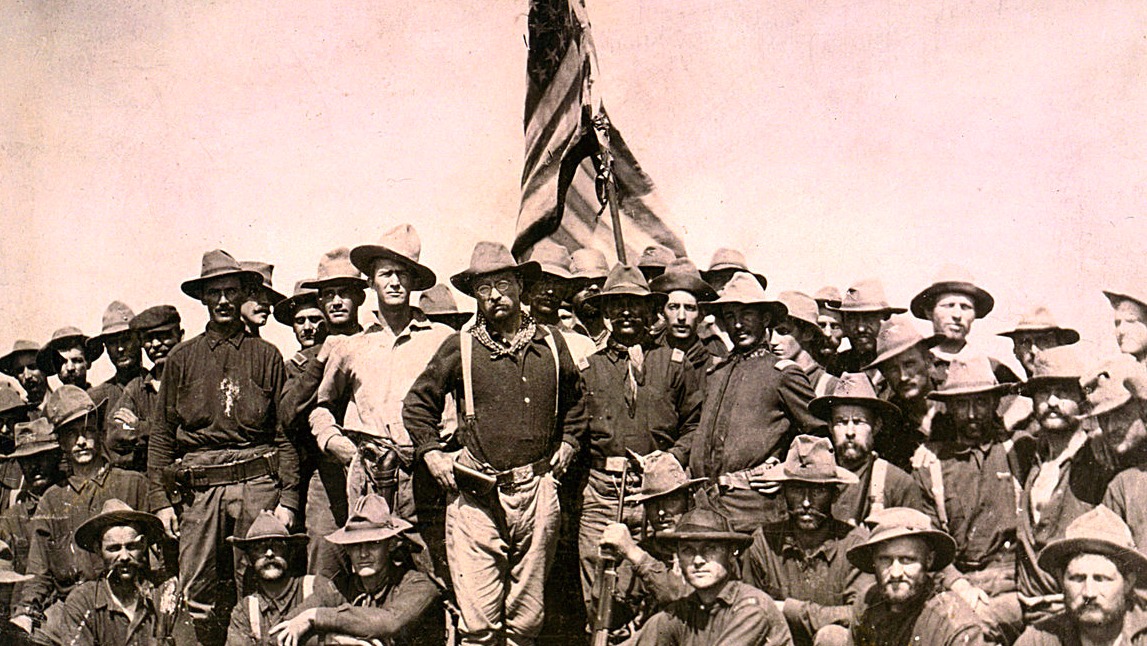
On April 10, 1899, just one year after his Rough Riders took San Juan Hill in the Spanish-American war, Theodore Roosevelt delivered his famous speech known as “The Strenuous Life.” The speech was meant to be a wake-up call to Americans at the beginning of the 20th century. He stressed that America’s continued greatness would only be possible through hard work and perseverance.

Much of his speech is applicable to entrepreneurs today. Here are 3 key takeaways:

“I wish to preach, not the doctrine of ignoble ease, but the doctrine of the strenuous life, the life of toil and effort, of labor and strife; to preach that highest form of success which comes, not to the man who desires mere easy peace, but to the man who does not shrink from danger, from hardship, or from bitter toil, and who out of these wins the splendid ultimate triumph.” ― Theodore Roosevelt

Success is sweeter. Entrepreneurial success is considerably sweeter because of how much hard work, suffering and perseverance is required. Moving outside your comfort zone and starting a business is hard. Most startup companies begin with little or no funding which requires owners to forgo salaries, work long hours and operate in makeshift offices. Many startups struggle for years before reaching any level of financial stability. As I wrote in the article, This Start-Up Story is a Must Read for Every Entrepreneur, It took Phil Knight more than 18 years to make Nike a success. Because the effort is significant, every business success is that much more satisfying. In my company, we still ring a bell for every customer order. We celebrate every victory no matter how small.

“Far better it is to dare mighty things, to win glorious triumphs, even though checkered by failure, than to take rank with those poor spirits who neither enjoy much nor suffer much, because they live in the gray twilight that knows neither victory nor defeat.” ― Theodore Roosevelt

The struggle is good. It’s better to face the uncertainties of being an entrepreneur than suffer in a job you dislike. In general, there is stability in working for a large company. The pay is good and there are opportunities for bonuses and promotions. Many people make long careers in big companies without giving it much thought. Countless others, however, dislike their jobs but are afraid of leaving and starting their own businesses. They know that being an entrepreneur is full of risks and success is far from certain. Roosevelt tells us that daring to do mighty things will lead to both glorious triumphs and the occasional failure. The strenuous life of an entrepreneur is filled with emotional highs and lows but it’s better than the dull gray twilight of laboring in a job you hate.

“We admire the man who embodies victorious effort; the man who never wrongs his neighbor, who is prompt to help a friend; but who has those virile qualities necessary to win in the stern strife of actual life. It is hard to fail; but it is worse never to have tried to succeed.” ― Theodore Roosevelt

Personal growth will happen. The entrepreneurial experience develops grit. Start-up life is filled with uncertainty and challenges. The entrepreneur’s journey requires passion and persistence over the long term. Angela Duckworth defines this as “grit.” In her book, Grit: The Power of Passion and Perseverance, Duckworth explains that grit is the one determining factor as to why some people endure the toughest trials and others drop out. Entrepreneurs develop these qualities as they work countless long days and endure endless trials to bring their ideas to life. Success is only achieved through persistence, passion and perseverance.

Roosevelt fervently believed in the strenuous life. He understood that people are at their best when overcoming hardships and trials. He considered effort and perseverance as essential to building strong character. The entrepreneur’s journey is filled with uncertainty and challenges. The road is long and filled with emotional highs and lows. Failure lurks around every corner and success is far from certain. Yet, these challenges lead to growth and overcoming the odds makes winning that much sweeter. For the entrepreneur, there is satisfaction in daring to do mighty things.

[Photo: Colonel Roosevelt and his Rough Riders at the top of San Juan Hill July 1898]