Stop Reading and Start Doing

Reading and research are great but they can also keep you from achieving your goals. Sometimes the best way to learn how to do something is to just do it.

A Man of Action

Last week I had the chance to meet an amazing leader, Mike Erwin. If you don’t know Mike, you should. He’s the guy who started one of the most significant and impactful military veteran organization in history, Team RWB. That would be a life’s work for most leaders but not Mike. He used what he learned in creating Team RWB to launch another non-profit organization, The Positivity Project, which trains school children across the country in the importance of positive relationships and character traits. Both of these organizations have impacted the lives of thousands of people in significant ways.

Mike is a man of action. He’s not afraid to turn what he is learning into real, concrete results. He is willing to take the leap and get started knowing he doesn’t have all the answers. Mike understands that, at some point, you need to stop reading and start doing. He recognizes the best way to learn something is by actually doing it.

“We have a world of information at our fingertips. What we need is the wisdom to discern what to do with that information.” Mike Erwin

Taking Action on What you are Learning

If you’ve followed me for a while, you know I love to read. I believe that leaders should be life-long learners. I also prefer to listen to leadership books on Audible or business podcasts instead of music when I’m traveling. I’m constantly being exposed to new ways of thinking. But what you may not know is that I keep a commonplace notebook, a simple place where I keep all the things I’m learning and the various ideas I have. And, I love turning those ideas into action. Let me give you an example.

I’m currently reading Stadium Status: Taking Your Business to the Big Time by John Brubaker. This is an amazing book about the mindset it takes to grow your ideas into a movement. In one chapter, John talks about a successful approach he used during his time as a college lacrosse coach. He knew the importance of building a great team and the significance of recruiting, so he coined the phrase “Recruit Daily or Perish” or RDOP. John wrote these letters everywhere in his office and even had them printed on the back of his phone. He knew he had to reach out to at least 20 people every day to recruit players, boosters, and supporters of his program. I loved this concept so I wrote it down in my commonplace notebook but then I did something else, I took action.

Quick Wins

I adopted and adapted John’s approach to fit my needs. As a small business leader, the most important thing I need right now is growth and orders. So, I took RDOP and changed it to SDOP, “Sell Daily or Perish.” I added contacting 20 customers a day to my daily routine. In the past two weeks, I have connected with more than 200 people in my industry, looking for a way I can help them. As a result, I have become more sales-focused and my company gained more than $40,000 in new orders. Taking an idea it and turning into action yielded significant results.

“It takes more than coming up with some great ideas to succeed in life. The land of success is only full of doers.” – Edmond Mbiaka

Too often I see leaders who read and research but they never take action. They are overcome with the paralysis of analysis and the fear of the unknown. They think that, if they study an idea long enough, they will know exactly how to do it. The truth is, you will never know until you try. I prefer to take the Mike Erwin approach, to take what I am learning and create real, concrete results. I know I don’t have all the answers but I’m going to learn along the way.

“Twenty years from now you will be more disappointed by the things that you didn’t do than by the ones you did do. So throw off the bowlines. Sail away from the safe harbor. Catch the trade winds in your sails. Explore. Dream. Discover.” – H. Jackson Brown Jr.

Take the Leap

So, what are you studying right now? What is preventing you from turning that into action? Maybe it’s time take to the leap and get started even though you don’t have all the answers.

Reach out to me on Twitter and let me know what projects you’re working on.


P.S. In his spare time, Mike Erwin also co-authored a book with Raymond Kethledge called Lead Yourself First: Inspiring Leadership Through Solitude which is one of my favorite leadership books. It inspired me to write an article about leadership and solitude.

5 Ways Skill Stacking Can Boost your Career

In five years, I went from being an associate design engineer in a cubicle to a general manager with a corner office leading a $50 million manufacturing business. I attribute some of this career growth to grit and persistence but the most important contributor was skill stacking.

Skill stacking is the notion that you can combine several normal skills to create a combination of abilities to become extraordinarily valuable. Scott Adams, the creator of the Dilbert comic strip, actually coined the phrase “talent stack” to describe this concept.

Adams says, “The idea of a talent stack is that you can combine ordinary skills until you have enough of the right kind to be extraordinary. You don’t have to be the best in the world at any one thing. All you need to succeed is to be good at a number of skills that fit well together.”

“A combination of mediocre skills can make you surprisingly valuable.” – Scott Adams

In his book, How to Fail at Almost Everything and Still Win Big, Adams describes how he combined an ordinary talent for drawing and writing, a decent sense of humor, a strong work ethic, a high risk tolerance and years of experience working in the corporate world to become a world-renowned syndicated cartoonist. His particular skill stack made him unique in the cartoon industry allowing him to publish a highly successful comic strip lampooning life in the business world.

“The goal of a talent stack is to stack different skills to create a sweet spot. A sweet point that dramatically raises your value in a competitive field.” – Celestine Chua

In my case, I stacked a different set of skills to land my first general management job. As a former Naval Officer on nuclear submarines, I already had years of leadership training and experience. I was also a decent engineer having helped design and launch a breakthrough product for the company.

While working as an engineer, I completed my MBA which gave me a good general knowledge of business, especially marketing and accounting. I also became an expert in quality by getting my Six Sigma Black Belt certification and volunteering to assist the company in preparing for a nuclear quality assurance audit. My work in quality was recognized and I was promoted to quality manager.

As a quality manager, I gained experience working with every department in the company. I worked with marketing, sales, production, purchasing, engineering and accounting. I even visited customers. This gave me a good overall understanding of the interworking of the company and helped me build relationships across the organization.

I stacked the skills of leadership, engineering, quality, a basic business knowledge, good relationships, a strong work ethic and a willingness to volunteer for tough assignments to become extraordinarily valuable. When a general management opportunity opened up to lead a manufacturing plant that made technical products used in nuclear power plants, I was a natural choice and I was given the assignment.

“Every skill you acquire doubles your odds of success” – Scott Adams

Skill stacking is a simple but powerful way for you to become extraordinarily valuable to your company. It can help you get recognition and land your dream job. Here are some ways skill stacking can boost your career:

You differentiate yourself from your peers. I have always believed the more skills you gain the more valuable you become to the organization. Stacking skills allows you to stand out from the pack. It also makes it difficult for others to compete with you. Opportunities will open up for the person who can add the most value to an organization.

You learn how to learn. Learning and mastering new skills makes acquiring future skills even easier. The more you work at acquiring skills, the more you identify the easiest and best ways you learn. You also develop a curious mind and an intrinsic love of learning. In effect, this “hard-wires” your brain for learning and mastery.

“In a fast-moving, competitive world, being able to learn new skills is one of the keys to success. It’s not enough to be smart — you need to always be getting smarter.” – Heidi Grant Halvorson

 You develop self-confidence. When I first started studying nuclear quality assurance standards, for example, I was intimidated. The standards seemed incomprehensible. But the more I read and understood, the more confident I became. In less than six months, I was the expert on the topic. Confidence comes from understanding and mastering new concepts and skills.

Your combined skill set is greater than the sum of the parts. If you chose the right skills to stack, the sum will be much greater than the parts. In the example of Scott Adams, his experience in the corporate world was the extra skill that really made Dilbert special. In my case, it was an understanding of nuclear quality assurance that gave me my first break. Look for a combination of skills that makes you unique.

You see things others don’t. When you stack skills and abilities, you see the world differently. You gain a broader understanding of more subjects than your peers and you will be sought out to add value to critical projects. For example, my business, engineering and quality skills were often sought out to evaluate potential merger and acquisition targets. This gave me exposure to senior management and strategic projects at a very young age. Even today as a CEO, I rely on my past engineering and quality experience almost every day.

Combining ordinary skills to become extraordinarily valuable in the workplace is something everyone can do. This is why skill stacking is so important to understand. It’s the one thing you can do to truly propel your career and land your dream job. Mastering new skills will put you on a path of life-long learning and give you more confidence. It will help you differentiate yourself from your peers and give you a unique insight into your organization.

If you want to learn more about skill and talent stacking, consider reading Scott Adams bestseller, How to Fail at Almost Everything and Still Win Big. This is a great book to read if you are interested in skill stacking, thinking about career planning or just a fan of Scott Adams and the Dilbert comic.


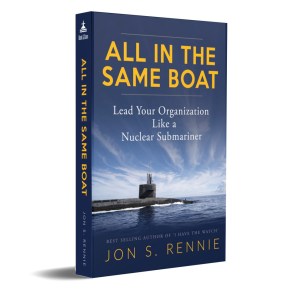
If you liked this post, you’ll love my new book, All in the Same Boat: Lead Your Organization Like a Nuclear Submariner.

You can find it HERE or on Amazon.

The One Job Nobody Wants (And Why You Should Take It)

Everybody wants to be the boss. They want to be in charge. They want the corner office, the assistant, the parking spot, the title, the salary and all the trappings that go along with being in charge. That is, of course, if everything is going well.

Nobody wants to be the leader when things are going wrong. Nobody wants to oversee a business that is failing with major problems in customer satisfaction, delivery, quality, profits, employee retention or morale. Nobody wants to be the leader in times of crisis.

While people will line up to lead organizations and departments that are performing well, almost no one wants the jobs that require an extraordinary leadership effort. Except for me. I want the hard leadership jobs. I want to lead the turnaround. I want to motivate a team to do the impossible. I want the helm in times of crisis. I want to run to the fire. In fact, you should want it as well. Let me explain.

“Never throughout history has a man who lived a life of ease left a name worth remembering.” ~ Theodore Roosevelt

Leading during tough times is difficult, but, the rewards are incredible.

“I’m not afraid of storms, for I’m learning how to sail my ship.” ~ Louisa May Alcott

Tough times require you to operate at your highest level. When the seas are calm and the weather is nice, you don’t have to be on the top of your game. But tough times require an intense, 24/7 focus on the problem. As a leader, everyone in the organization is watching you and depending on you to make the right decisions to lead them out of the situation. It requires focus, determination, decisiveness, courage, intensity and perseverance. It will take your absolute best.

You learn a lot about yourself during tough times. The challenge of leading during difficult times is learning to deal with those voices of self-doubt, fear and worry while your team is depending on you for confidence and strength. Tough times are the ultimate test of a leader’s character and resolve. There is nothing that will boost confidence more than facing the toughest challenge in your career and coming out on top.

You build strong bonds with your team during tough times. When you stand shoulder to shoulder with your team through a crisis, you build a bond that can last a lifetime. When a leader and a team step up and work together through a tough situation, it builds a powerful new level of trust and respect. The overall capability of the organization is forever enhanced through this experience.

Tough times give you a new perspective. Your perspective forever changes from having withstood a difficult period. You have a much greater appreciation for when times are good. You also are less likely to let people, politics and minor issues get you down. Tough times help build your maturity as a leader.

Tough times become an anchor point for the rest of your career. Great leaders can almost always point to a time in their career when they became great. In most cases, it was leading an organization through a tough situation. The most challenging situation you face may be the defining moment in your career.

Most of us don’t want to go through difficult times. It’s human nature to want things to be easy. The problem is that, when things are easy and you aren’t challenged, you don’t grow. Confidence and maturity as a leader come from dealing with your self-doubt and fears while overcoming adversity.

Tough times require your best. You learn what you are capable of, you learn what your team is capable of, you build strong bonds, you gain a new perspective and your performance will define your career. Why not take the tough leadership jobs? It may be the best thing that ever happened to you.

Photo credit: “Mike” Michael L. Baird, https://www.flickr.com/photos/mikebaird/6932387544