Leading in Difficult Times

I was talking to a friend the other day and we were reminiscing about a business we worked at that went through a really rough period. Market demand had dropped, orders were down, margins were being squeezed, and we had a new business system that limited our view of the situation.

He mentioned something that really struck me.

He said, “I’m glad we went through that time because it made me a much better leader.

He’s right.

Leading during difficult times takes everything you have but the truth is, you will be better off because of the experience.

Having led both military and business organizations through some pretty difficult periods, I’m convinced that tough times make you a better leader.

[bctt tweet=”Tough times make you a better leader” username=”jonsrennie”]

Let me suggest five reasons why:

Tough times require you to operate at your highest level. When the seas are calm and the weather is nice, you don’t have to be at the top of your game. But tough times require an intense, 24/7 focus on the problem. As a leader, everyone in the organization is watching you and depending on you to make the right decisions to lead them out of the situation. It requires focus, determination, decisiveness, courage, intensity, and perseverance. It will take your absolute best.

You learn a lot about yourself during tough times. The challenge of leading during difficult times is learning to deal with those voices of self-doubt, fear, and worry while your team is depending on you for confidence and strength. Tough times are the ultimate test of a leader’s character and resolve. There is nothing that will boost confidence more than facing the toughest challenge in your career and coming out on top.

[bctt tweet=”Tough times are the ultimate test of a leader’s character and resolve.” username=”jonsrennie”]

You build strong bonds with your team during tough times. When you stand shoulder to shoulder with your team through a crisis, you build a bond that can last a lifetime. When a leader and a team step up and work together through a tough situation, it builds a powerful new level of trust and respect. The overall capability of the organization is forever enhanced through this experience.

Tough times give you a new perspective. Your perspective forever changes from having withstood a difficult period. You have a much greater appreciation for when times are good. You also are less likely to let people, politics, and minor issues get you down. Tough times help build your maturity as a leader.

[bctt tweet=”Your perspective forever changes from having withstood a difficult period.” username=”jonsrennie”]

Tough times become an anchor point for the rest of your career. Great leaders can almost always point to a time in their careers when they became great. In most cases, it was leading an organization through a tough situation. The most difficult situation you face may actually be the defining moment in your career.

Most of us don’t want to go through difficult times. It’s human nature to want things to be easy. The problem is when things are easy and you aren’t challenged, you don’t grow. 

Confidence and maturity as a leader come from dealing with your self-doubt and fears while overcoming adversity.

So, instead of complaining or worrying about the current COVID-19 pandemic, why not try to celebrate these tough days?

Yes, the times are hard. But this may be the best thing that ever happened to you as a leader!

I’ve been covering the issue of leading in a crisis daily on my Twitter account, so make sure to follow me and add your thoughts to this conversation.

Deep Leadership Podcast

Also, listen to my interview with Monty Granger on my podcast. Monty is a retired Army Major who was called into action to set up the Army medical facilities at Guantanamo Bay right after 9/11. He knows what it means to lead through a crisis.


(U.S. Navy photo by Mass Communication Specialist 2nd Class Jonathan Clay)

Remembering 9/11

“If we learn nothing else from this tragedy, we learn that life is short and there is no time for hate.” —Sandy Dahl, wife of Flight 93 pilot Jason Dahl

Patriot Day is a National Day of Service and Remembrance where we remember and honor those who were lost on 9/11. We honor the heroes who ran into burning buildings, the passengers who stormed the cockpit, the men and women serving their country when the Pentagon was attacked, and all the innocent lives who were lost.

Remembering 9/11: Lessons in Crisis Leadership


The world changed on September 11, 2001. And as a leader, I changed too.

I was seven years out of the Navy and leading my first manufacturing plant. My time in the military was over and I had started a new career running a factory which made products for the electric utility industry.  The world was relatively peaceful and, as a former Cold War submarine officer, I felt like I had done my small part to make it that way. My life was business and manufacturing now, military life was in the past.

On that fateful morning, my assistant came into my office and told me I needed to get to the cafeteria quickly. I wasn’t sure what was happening but I ran down to see. I had recently installed TVs in our break room so employees could watch the news during their downtime. I arrived to see the first World Trade Center tower burning from an apparent plane crash. Like many, I watched in horror as the second plane hit the other tower on live TV.

I was trying to come to grips with what I was seeing when I was suddenly struck with the realization that none of my 160 employees even knew what was unfolding in New York City. Something bad was happening and I needed to let them know right away. Maybe my military training kicked in or maybe I just knew people needed to hear this terrible news directly from their boss.

I didn’t have a 1MC loudspeaker system like I had in the Navy to inform the crew of critical information, so I improvised. I had the supervisors gather all the employees to the front of the plant where we had some extra space. I climbed into a scissor lift and raised myself up so everyone could see me.

I proceeded to tell them everything that was happening and all the limited information I knew. I saw the shocked faces and the looks of disbelief. I was struck with emotion and I asked everyone to bow their heads. I said a small prayer for the people of New York. I then told everyone to go to the cafeteria to see for themselves. I went as well.

In the days and weeks following, I saw amazing examples of leadership and I learned the importance of crisis communications. I saw New York Mayor, Rudy Giuliani, everywhere. He held press conferences, met with reporters, and talked to people on the streets. Still covered in dust from the towers, he told the world what he knew and what the city was doing in response to the attack. When asked how many were feared dead, he responded emotionally, “The number of casualties will be more than any of us can bear ultimately.”

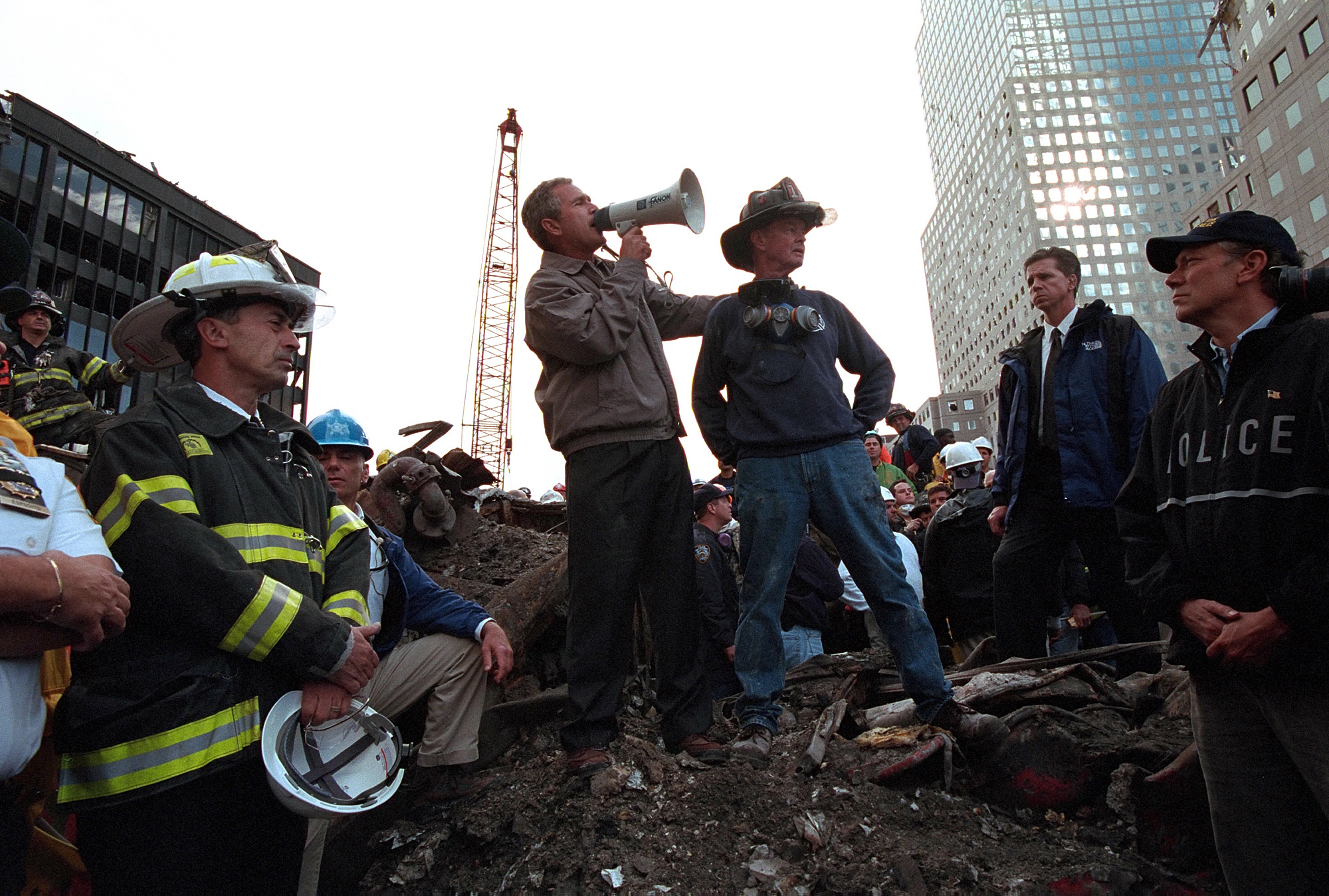
A few days after the attack, I watched President Bush tour ground zero. I watched his emotion as he grabbed a bullhorn and climbed a pile of rubble. With an arm around firefighter Bob Beckwith, he probably gave the best speech of his life. “I can hear you!” he declared. “The rest of the world hears you! And the people – and the people who knocked these buildings down will hear all of us soon.”

I never thought much about crisis leadership before 9/11. The events of that day and the weeks that followed made me realize its importance. When everything goes wrong, people look to their leaders for answers, guidance, and reassurance. In an instant, the leader’s role changes when a crisis occurs. If you find yourself in this situation, remember these three simple principles:

Be present. The most important thing is to be there. Like Rudy Giuliani, people need to see us. We need to be where our people are. They need to talk to us. We need to answer their questions and let them know what to do. In a crisis, a leader’s role changes. Like President Bush, we need to get out of our offices and go to ground zero.

Be honest. In the middle of a crisis, when very little is known, people have a lot of questions. As leaders, we often don’t have the answers and that’s alright. The most important thing is to be honest and tell people what you know and what they need to do. In most cases, the information will change. So, like Giuliani, provide regular updates to let your team know what is going on.

Be real. Crisis communications needs to be authentic. When things are going bad, you need to have a real dialogue with your team. This is not a time for polished speeches. Let them know how you feel and don’t be afraid to show your emotions. The last thing people need to see in a crisis is an unemotional, uncaring leader.

Patriot Day is a National Day of Service and Remembrance where we remember and honor those who were lost on 9/11. We honor the heroes who ran into burning buildings, the passengers who stormed the cockpit, the men and women serving their country when the Pentagon was attacked, and all the innocent lives who were lost.

Like many, I was forever changed by the events that day. As America was pulled into a war against a new global enemy, I learned I was underprepared to handle a crisis as a civilian leader. I discovered how important crisis leadership is. I know now that, in an instant, a leader’s role can drastically change. I observed great examples of crisis leadership and I learned what to do when the next time a crisis hits.