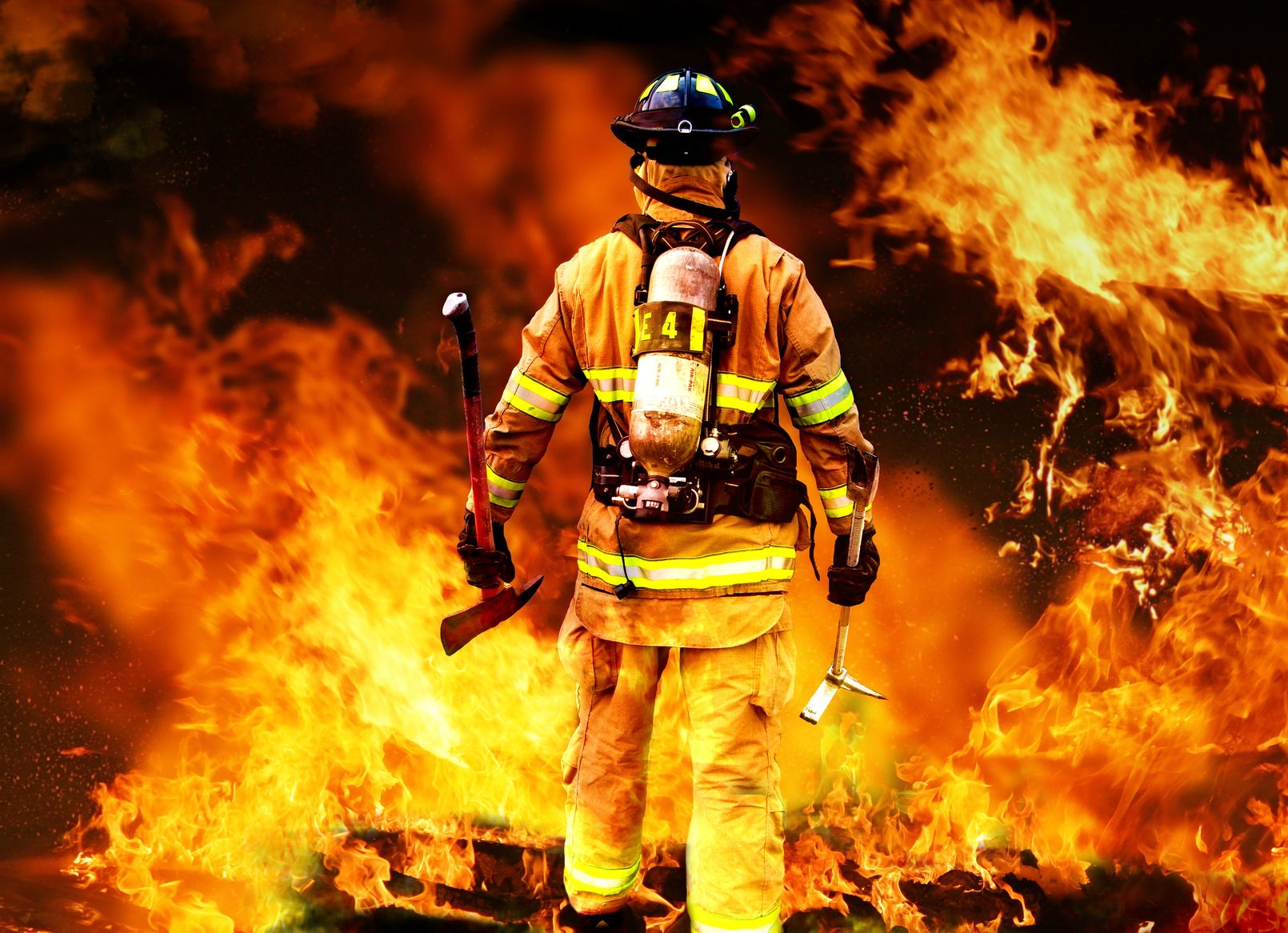
Leadership means Running Towards the Fire

Courage is Being Scared to Death, but Saddling Up Anyway ~John Wayne

I’m a trained firefighter. Actually, I’m a U.S. Navy veteran who served on nuclear submarines which means I have been trained to fight fires. It’s probably no surprise that a fire on a submarine is one of the most dangerous things that could ever happen on board. Smoke can quickly fill compartments and asphyxiate sailors. The heat and flames can spread to weapons, volatile materials, and critical systems creating catastrophic damage. A fire can quickly destroy a submarine if not extinguished immediately. That’s why we were trained to ignore our natural instincts to move away from the fire and, instead, run towards the fire to put it out as quickly as possible.

Business is the same way. There are situations that can occur that, if not addressed immediately, can cause catastrophic damage. These might include a product failure, a customer complaint, a supplier quality issue, a change in the market landscape, new technology, an employee situation, or any number of challenges that businesses face each day. The problem is that people in businesses also have a natural tendency to move away from or ignore problems.

Take for example the recent announcement of the bankruptcy of Radio Shack. Joshua Brustein refers to it as a “slow-motion collapse” because the warning signs were all there but Radio Shack’s management team did little to attack the problems. They didn’t run towards the fire. The market had changed dramatically. Other companies, like Best Buy, were doing a better job solving technology issues for customers. Wal-Mart and other low-cost retailers now sold many of the components, wires, and connectors that only were available in the past from Radio Shack. Radio Shack became stuck in the past and reduced to only the last resort for customers who couldn’t get their problems solved somewhere else. As a result, stores were empty, employees sat idle, revenues fell, and their stock lost 99.6% of its value. On top of that, they hadn’t shown a profit in three years.

As leaders, we can’t allow this to happen to our businesses. It is critical we create a culture where leaders and employees run towards the fire. As firefighters, our teams must be trained to ignore their natural instincts to move away from or avoid problems. The future of our organizations may depend on it. There are three simple ways to create an organizational culture that attacks problems head-on:

Lead from the front. There are large problems facing your business that only you can solve: A major problem at a strategic customer, a change in the competitive landscape requiring a new strategy, a significant market shift, or a new technology introduction. Your employees will be looking to you to lead the effort to attack these issues with tenacity. How you respond to these challenges will set the tone for the rest of the organization.

Celebrate those that run to the fire. I tell my employees that, when it comes to priorities, they should always take care of the customer first. I have had the pleasure to receive dozen of calls and e-mails from customers who were extremely happy with how one our team members dealt with a problem. I always make a point to thank these employees personally and discuss it in staff meetings and town hall events. The employees who take a relentless approach to taking care of a problem before it gets out of control are to be celebrated.

Attack the fire while it’s still small. There is a universal truth about problems and fires. The longer it takes to attack them, the larger they get. Almost every significant issue that gets to senior management was a smaller problem that could have been resolved in the early stages. That’s one of the reasons I believe in having a strong set of Key Performance Indicators (KPIs) to measure the performance of the business in real time. Negative trends in price, margin, product mix, customer satisfaction, quality, or on-time delivery can be quickly identified and addressed before they get too large.

I should also make another point about firefighting. I have also witnessed another extreme in business leadership with organizations that lacked structure and stable processes, where its employees were always putting out fires. Most of the management team simply moved from crisis to crisis. This is an unhealthy organizational situation and this is not the kind of firefighting I am referring to. It is the leader’s job to build a stable, smooth running business. Having to run to a fire should be the exception not the rule.

Ignoring or moving away from the problems that face your business can have catastrophic effects. We can see it play out with the bankruptcy of Radio Shack. As leaders, it is our responsibility to create a culture where employees resolve issues quickly. We can do this by leading from the front, celebrating those employees who live these values, and attacking problems before they get out of control. We need to teach our employees to ignore their natural instincts and move towards flames. The future of our organizations may depend on it.

If you want to become a better leader, order my latest book You Have the Watch: A Guided Journal to Become a Leader Worth Following.

This guided journal provides daily leadership guidance and reflection for an entire year. Each week, you will learn a new leadership skill. Each day, you will explore a new facet of that skill. As you do the work and put in the reps as a leader, this journal will be your constant companion. By the end of the year, you will master fifty of the most important leadership skills.


5 Reasons to Celebrate the Tough Times

“I’m not afraid of storms, for I’m learning how to sail my ship.” ~Louisa May Alcott

I was talking to a friend the other day and we were reminiscing about a business we worked at that went through a rough period. Market demand had dropped, orders were down, margins were being squeezed, and we had a new business system that limited our view of the situation. He mentioned something that really struck me. He said, “I’m glad we went through that time because it made me a much better leader.”

Leading during difficult times takes everything you have, but the truth is, you will be better off because of that experience. In a great article called 9 Things Great Leaders Do in Difficult Times, Bill Murphy Jr. says, “Great leadership seems easy when things are good and everybody’s happy. When times grow tough, however, a leader’s true colors are revealed.”

Murphy suggests that in difficult times, great leaders:

  1. Control their fears
  2. Focus on the mission
  3. Put the mission ahead of themselves
  4. Rely on their training and preparation
  5. Are tough, but human
  6. Encourage their people
  7. Communicate effectively
  8. Use their resources wisely
  9. Imitate the leaders who inspire them

Having led both military and business organizations through some pretty difficult periods, I would agree with Murphy’s thoughts on this subject. I also think there is another side to tough times that he did not consider. As my friend said to me, tough times make you a better leader. Let me suggest five reasons why:

Tough times require you to operate at your highest level. When the seas are calm and the weather is nice, you don’t have to be on the top of your game. But tough times require an intense, 24/7 focus on the problem. As a leader, everyone in the organization is watching you and depending on you to make the right decisions to lead them out of the situation. It requires focus, determination, decisiveness, courage, intensity, and perseverance. It will take your absolute best.

You learn a lot about yourself during tough times. The challenge of leading during difficult times is learning to deal with those voices of self-doubt, fear, and worry while your team is depending on you for confidence and strength. Tough times are the ultimate test of a leader’s character and resolve. There is nothing that will boost confidence more than facing the toughest challenge in your career and coming out on top.

You build strong bonds with your team during tough times. When you stand shoulder to shoulder with your team through a crisis, you build a bond that can last a lifetime. When a leader and their team step up and work together through a tough situation, it builds a powerful new level of trust and respect. The overall capability of the organization is forever enhanced through this experience.

Tough times give you a new perspective. Your perspective forever changes from having withstood a difficult period. You have a much greater appreciation for when times are good. You also are less likely to let people, politics, and minor issues get you down. Tough times help build your maturity as a leader.

Tough times become an anchor point for the rest of your career. Great leaders can almost always point to a time in their career when they became great. In most cases, it was leading an organization through a tough situation and coming out on top. The most difficult situation you face may actually be the defining moment in your career.

Most of us don’t want to go through difficult times. It’s human nature to want things to be easy. The problem is that when things are easy and you aren’t challenged, you don’t grow. Confidence and maturity as a leader come from dealing with your self-doubt and fears while overcoming adversity. Tough times require your best, you learn what you are capable of, you learn what your team is capable of, you build strong bonds, you gain a new perspective, and your performance will define your career. So why not celebrate the tough times? It may be the best thing that ever happened to you.

So what do you think? Can you grow as a leader without experiencing difficult times? Does your learning accelerate when facing a crisis? Should we seek out leaders that have proven themselves in tough trials? Are there other ways our perspective changes by enduring tough times?