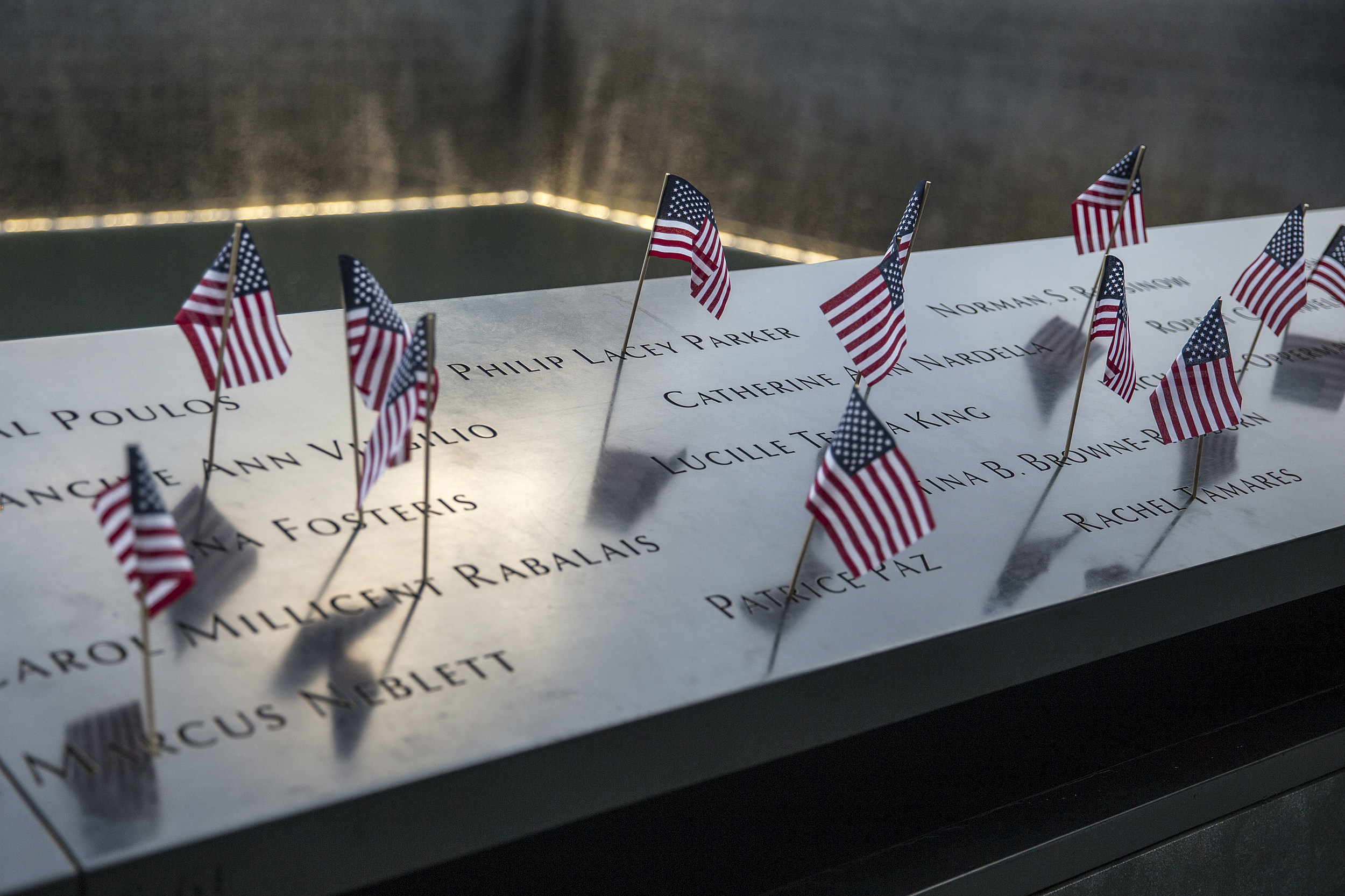
Remembering 9/11

“If we learn nothing else from this tragedy, we learn that life is short and there is no time for hate.” —Sandy Dahl, wife of Flight 93 pilot Jason Dahl

Patriot Day is a National Day of Service and Remembrance where we remember and honor those who were lost on 9/11. We honor the heroes who ran into burning buildings, the passengers who stormed the cockpit, the men and women serving their country when the Pentagon was attacked, and all the innocent lives who were lost.

Staying on Course: How to Protect Your Mission

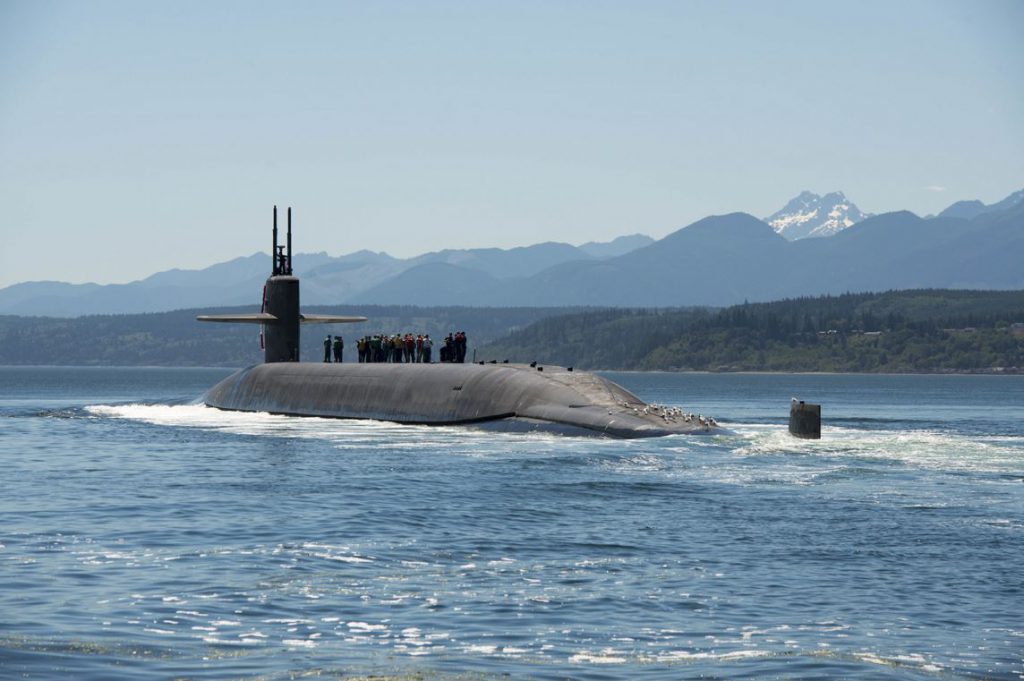
As the machinery division officer on a nuclear submarine during the cold war, I had the challenging task of checking the boat for “rattles” before every deployment. This meant climbing down into every part of the hull structure with a rubber mallet and pounding on anything that could possibly move to make sure it was secure. The goal was to eliminate anything that could make noise.

I knew our boat had one mission, to remain undetected and be prepared to launch our missiles if needed. Inspecting the hull structure was simply part of that mission. In fact, everything we did on board revolved around the mission. Our training, our routines and even our footwear ensured we would remain quiet and ready. “Hide with pride” was the nickname we all used to describe our mission.

The military does a respectable job of focusing its people on the mission. This cannot be said for most companies and organizations. If you asked ten employees what the mission of their company is, you will likely get ten different answers. This is because most company leaders assume everyone knows the mission. The sad truth is that no one really knows what the mission is because leaders don’t talk about it. And when the mission is unknown or unclear, chaos reigns.

One of the biggest problems is “mission drift.” Over time, organizations routinely drift from their founding purpose. When a company or organization is young, its founding mission is usually very clear. The founders and early employees instinctively understand the mission and carry it out daily. But, as time goes on and new people are brought in, the mission becomes muted.

Peter Greer and Chris Horst discuss this in their book, Mission Drift: The Unspoken Crisis Facing Leaders, Charities, and Churches. They say that “without careful attention…organizations will inevitably drift from their founding mission.” Staying on course and protecting your mission can only be accomplished through focused and conscious effort.

Consider these five actions to keep focused and stay on track:

Start with why. Simon Sinek’s breakout bestseller, Start with Why: How Great Leaders Inspire Everyone to Take Action, explains how some organizations are simply more innovative, influential and successful than others. The reason is that their leaders understand and communicate their “why” to their employees. These leaders realized that people aren’t truly motivated by a vision or a mission until they fully understand the motivation behind it. Figuring out your “why” is critical to motivating your team to stay on course.

Know your mission. You can’t expect to be a mission-focused organization if people don’t know the mission. Most leaders incorrectly assume everyone knows the mission. Don’t make this mistake. Communicate and repeat the mission statement every day in meetings and daily discussions. Develop a common language around the mission like we did in the Navy. Make it simple and easy to understand.

 Hire people who embody the mission. Mission-minded organizations know that it’s the people that carry out the mission. This is why hiring the right employees is so critical. Look for individuals who display characteristics and experience that will be essential in achieving the mission. Look for those that will fit the culture of the organization. Leaders should also work with new employees to set expectations early and to monitor their progress.

Make the hard decisions to protect the mission. The real test of a leader is making the hard decisions and staying true to the mission when faced with conflicting priorities. These typically involve employees, ownership, money, customers, suppliers or partners. A leader who protects the mission and makes the tough call to put the mission first will be respected by the team. They will know there is a deep commitment to the vision of the organization.

Measure what matters. What gets measured, gets done. The things you measure should reflect your organization’s mission and objectives. For example, if you want to be the fastest supplier in the industry, measure lead times. If you are trying to become a premier college-prep high school, measure the number of college scholarships awarded to seniors each year. The challenge is identifying the right things to measure. Metrics that matter to your mission aren’t always easy to identify or track. Still, push hard to find something that can be used as a gauge of your success.

Staying on course and protecting the mission is difficult, especially in the long term. Mission drift and conflicting priorities can derail the efforts of any organization. Finding your “why” and communicating your mission on a daily basis to employees will help solidify your focus. Keep your mission in mind when hiring, making decisions and measuring results. Don’t leave the success of your organization to chance.  Protecting your mission can only be accomplished through focused and deliberate effort.

[Photo Credit: U.S. Navy photo by Mass Communication Specialist 1st Class Amanda R. Gray/Released]

Honoring Those That Never Came Home – The Evolution of Memorial Day

Just West of Cambridge, England on an immaculate slope of deep green grass surrounded by sprawling woodlands lies a powerful reminder of the tragedy of war. The Cambridge American Cemetery sits on more than thirty acres. The land was donated to the U.S. by Cambridge University. It remains the only permanent American World War II military cemetery in the British Isles.

As an American graduate student at Cambridge University and a U.S. Navy Veteran, I was drawn to this sacred place. During my time in England, I made many trips here to walk among the 3,812 white grave markers neatly arranged in a 90-degree arc, each one facing a large American flag in the center.

Every white cross and star of David represented a young American who died in the Battle of the Atlantic or in the bombings of Northwest Europe. As I walked the rows, I found myself reading the names, calculating their ages, and thinking about these heroes. These were young men and women who left their country to defend a place far from their homes.

I was very close to my two grandfathers who both served in World War II. They each had a profound and powerful effect on who I am as a person. One served on a Navy Destroyer Escort in the Atlantic and the other was in the Army in the Pacific theatre. Both men survived the war, returned to their hometowns, and started families. They had children, grandchildren, and great-grandchildren. Each lived a long and happy life.

The heroes buried in Cambridge never had that chance. These brave Americans died young and never returned home. Their lives were cut short and they remain silent on that quiet slope of green grass in the British countryside. On Memorial Day, I always find myself thinking about those heroes on that hill.

As a veteran, I worry that Americans will forget about the men and women who paid the ultimate price for the freedoms we enjoy. The declining number of veterans is part of my concern. In 2016, only 7% of U.S. adults were veterans, down from 18% in 1980. The gap between those who served and those who didn’t continues to grow. This could lead to Americans forgetting about those that sacrificed so much.

Today, Memorial Day has become a three-day weekend with sales, picnics, barbeques, vacations, and the unofficial start of the summer season but it didn’t start out this way. It was originally called Decoration Day and was dedicated to honoring those that died serving in the military.

After the Civil War, America was dealing with the loss of more than 620,000 soldiers. General John A. Logan, the leader of an organization for Northern Civil War veterans, called for May 30th to be set aside “for the purpose of strewing with flowers, or otherwise decorating the graves of comrades who died in defense of their country.” The date was chosen specifically because it wasn’t the anniversary of any particular Civil War battle.

On the first Decoration Day on May 30, 1868, former Union General and Ohio Congressman James A. Garfield spoke at Arlington National Cemetery. His words were clear and powerful. He proclaimed that, “We do not know one promise these men made, one pledge they gave, one word they spoke; but we do know they summed up and perfected, by one supreme act, the highest virtues of men and citizens. For love of country they accepted death, and thus resolved all doubts, and made immortal their patriotism and their virtue.”

That day, more than 5,000 Americans showed up at Arlington to decorate the graves of 20,000 Union and Confederate soldiers. From that point forward, the tradition grew with similar celebrations throughout the country.

For more than 50 years, Decoration Day commemorated those killed in the Civil War only. It wasn’t until World War I that the tradition expanded to include American military personnel who died in all wars. Memorial Day, as we know it, became an official federal holiday in 1971 as Americans dealt with the effects of the Vietnam War.


Today, Memorial Day is an American federal holiday, observed on the last Monday of May. It’s set aside to honor the men and women who died while serving in the U.S. military. It’s a tradition to fly the flag at half-staff from dawn until noon and Americans are encouraged to visit cemeteries and place flowers or flags on graves to honor those who have died in military service. It is celebrated each year at Arlington National Cemetery with a ceremony in which American flags are placed on each grave and the President or Vice President lays a wreath at the Tomb of the Unknown Soldier.


In 2000, President Bill Clinton signed the “National Moment of Remembrance Act” which designated 3:00 PM local time on Memorial Day each year as the National Moment of Remembrance. It is tradition to have either a moment of silence or to play “Taps” at 3:00 PM.

This Memorial Day, let’s remember these American heroes. Take time to find a local memorial service in your area. Visit a military cemetery or memorial. Watch the ceremony at Arlington. Share in a moment of silence at 3:00 PM. Spend time to think about the young men and women who left their country to defend our freedoms so far from their homes and let’s honor those that never came home.

This article was written for Work of Honor, a community of veterans and business professionals committed to combining best in class business and military operational strategies to create a strong economic community.