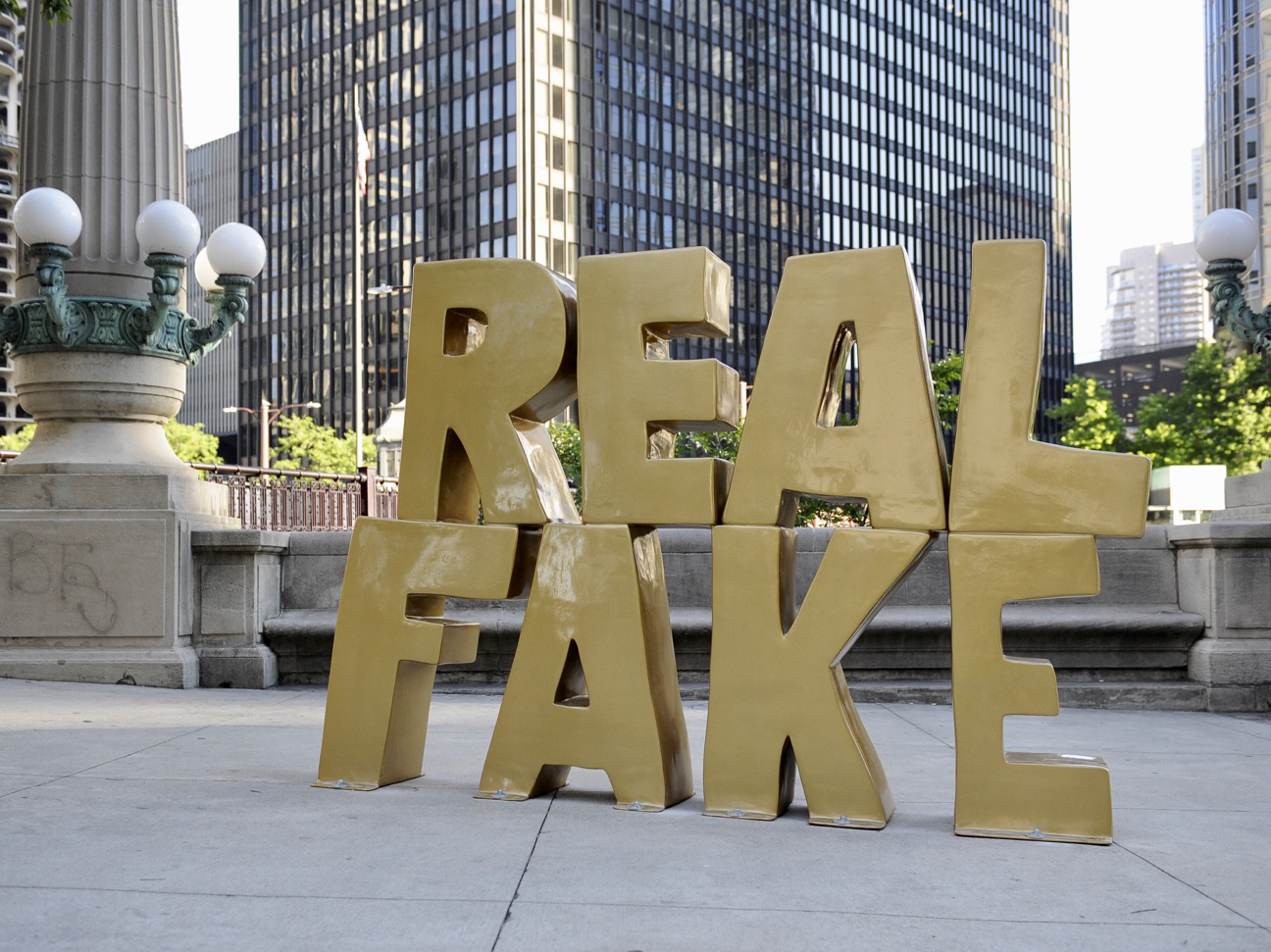
The Truth about Authenticity


While fake news is often hard to spot, phony advertising, inauthentic companies, and fake people aren’t.

I was listening to my favorite podcast the other day and I heard it. I wasn’t listening for it, but it was obvious. Commercials on podcasts usually involve the host telling you how great a product or service is. It’s typically something they have used personally and they give you their own perspective. It’s almost like an endorsement, so advertisers normally give the host freedom to ad-lib. The result is an advertising segment that seems genuine and authentic.

That’s why it stood out to me when the host of the podcast read this advertisement segment verbatim. It was for the new Toyota CH-R. The ad seemed like it was written by a high-priced Madison Avenue firm. Every word was carefully selected, the message was perfectly crafted, and it was likely focus-tested to provoke a picture-perfect response. The host even read the flawless, well-written legal disclaimer at the end. To me, it sounded phony.

In the podcast world of personal-endorsement-style advertisements, this one felt fake. It didn’t seem truthful or genuine. It was over-produced, over-engineered, and too perfect. It wasn’t real.

“There’s authenticity in a first take.” Mike Rowe

Mike Rowe of Dirty Jobs fame would agree. He made a living off being “authentic.” He said, “Dirty Jobs didn’t resonate because the host was incredibly charming. It wasn’t a hit because it was gross, or irreverent, or funny, or silly, or smart, or terribly clever. Dirty Jobs succeeded because it was authentic.” The show was the first of its kind. There was no script, no rehearsal, and only one take. They turned the cameras on and Mike responded and reacted to his environment. It was genuine and people loved it.

“I believe the enemies of charm are deliberateness in much the same way I would argue that the enemies of authenticity are production.” Mike Rowe

Companies can also be inauthentic when they aren’t true to their message. Think about Subway restaurants. They’ve used the advertising slogan, “Eat Fresh,” since 2002. They came under fire when it was discovered they used azodicarbonamide in their bread as a conditioner. Food blogger Vani Hari, of the popular food blog Food Babe, originally drew public attention to this issue. She revealed that azodicarbonamide was the same chemical used in yoga mats and shoe rubber. In 2014, after public pressure grew, Subway stopped using the chemical in their bread recipes.

But the damage to Subway was done. Subway’s sales fell. They lost 3% in 2014, despite opening 778 new stores. They faced eroding public perception regarding the quality of their food while still using the “Eat Fresh” slogan. The main reason they lost consumer confidence was because they were seen as phony and inauthentic. You can’t claim “Eat Fresh” and use a yoga mat chemical in your bread.

People can be fake as well. People who make promises with no intention to keep them, those that make friendships only for personal gain, or those that have hidden agendas are seen as shallow and phony. You can probably name people with these qualities where you work. They can be successful in the short term but only until people learn their true character. Then, no one wants to work with them.

“People with good intentions make promises, but people with good character keep them.” Anonymous

In a world where we are surrounded by phony people and messages, how can we be more authentic? Let me suggest three things.

Be true to the first take. Avoid over-processing and over-engineering your message. A product training video, for example, that has a few mistakes seems more real than one that has been carefully edited. A quick, witty tweet delivered at the right time will get more attention than a perfectly polished post. We are bombarded daily with highly-engineered, focus-group tested messages. An honest first-take is refreshing and seems more authentic.

Be true to your company promise. What does your company stand for? What is the brand promise? Whatever it is, make sure you are delivering to that promise. If you commit to 24 hour deliveries, make sure you are built for speed. If you promise the “lowest prices,” make sure you know that’s true. If you claim “eat fresh,” then know what’s in your recipes. Being true to your brand promise will make you appear more authentic.

Be true to others. Nobody wants a fake friend. Be real. If you make a promise, deliver on it. Build relationships based on mutual respect not hidden agendas and personal gain. Be there for people in the good times as well as the bad. Put others ahead of yourself. Don’t talk behind their backs. Show respect for everyone on your team. Being true to others and being a person of character will make you more authentic.

Let’s get rid of fake news and, while we’re at it, let’s get rid of phony advertising, untruthful companies, and fake people. Authenticity is rare. We will stand out if we embrace reality and stop being so over-engineered on fake. Embrace your genuine self, be original, and see what happens. It certainly worked for Mike Rowe.

What do you think? Does authenticity stand a chance today? Are there other reasons why “Dirty Jobs” had such mass appeal? How can we employ authenticity in our messaging? What are some other examples of authentic or inauthentic companies? What was the result? Let me know in the comment section below.

Stop Expecting People to be Perfect

I have written many times that leadership is a people business. It’s about motivating and challenging people to accomplish big things. If you don’t like people, you shouldn’t be a leader. The truth is, people are messy. They have fears, anxieties, quirks, annoying habits, hangups, issues, and problems. Each member of your team is probably struggling with something at home or at work that is affecting them in some way. Leading people is not simple and can be frustrating at times. But that’s OK.

“When you stop expecting people to be perfect, you can like them for who they are.” Donald Miller

Reading Donald Miller’s book, A Million Miles in a Thousand Years, made me think about this leadership issue again. People are amazing and they can truly surprise you with what they can do, but, if you expect them to be perfect every day, you are going to be discouraged. So, as Miller suggests, stop expecting perfection from your employees and enjoy who they are and what they bring to your team. Embrace the mess and keep motivating them towards great things.

What do you think? Why do we seem to focus on the negatives? How can we look past the quirks and annoying habits to see the best in people? If we simply accept people as they are, how much more could they contribute to the team? Let me know in the comment section below.

3 Reasons Why the Struggle is More Important than the Goal

I’m not a runner, but I ran six half-marathons once. Growing up in New England, it was always a dream to one day run the Boston Marathon but training for and running six half-marathons was all I needed to realize how difficult that would be. I learned that running is hard and running long distances is even harder. Although I only conquered the 13.1 mile race, I learn a lot about myself and what I could do if I didn’t quit.

“If you’re going through hell, keep on going. Don’t slow down, if you’re scared, don’t show it.” Rodney Atkins

The truth is, long distant running is not about bragging rights, personal records, t-shirts or race medals. It’s about challenging yourself to do something difficult. Most people see what happens on race day but they don’t witness the months of training and the hours spent grinding out the miles day after day. There is excitement the day you sign up for a race and the day you finish a race, but the real work and struggle is done in the middle.

“Nothing in the world is worth having or worth doing unless it means effort, pain, difficulty… I have never in my life envied a human being who led an easy life. I have envied a great many people who led difficult lives and led them well.” Theodore Roosevelt

I have been reading Donald Miller’s book, A Million Miles in a Thousand Years and it has me thinking about the importance of the hard work in the middle of any difficult challenge and how it changes you. As an entrepreneur, I can fully relate. There is excitement in starting a new company and setting out on a new course. But, after the newness wears off, the hard work begins. Most people never see all the effort that goes into getting a new business off the ground and how it affects the people involved. Miller talks about this in a passage called “The Thing about a Crossing.”

It’s like this when you live a story: The first part happens fast. You throw yourself into the narrative, and you’re finally out in the water; the shore is pushing off behind you and the trees are getting smaller. The distant shore doesn’t seem so far, and you can feel the resolution coming, the feeling of getting out of your boat and walking the distant beach. You think the thing is going to happen fast, that you’ll paddle for a bit and arrive on the other side by lunch. But the truth is, it isn’t going to be over soon. The reward you get from a story is always less than you thought it would be, and the work is harder than you imagined. The point of the story is never about the ending, remember. It’s about your character getting molded in the hard work of the middle.

As Miller suggests, the hard work in the middle of any difficult challenge is more important than the ending. There are three distinct reasons for this:

The struggle builds character. An easy life is one that doesn’t change you. Challenge brings about change. The struggle requires determination, courage, intensity and perseverance. Some days it takes everything to keep going especially when the end seems nowhere in sight. It’s those moments, like being on the ninth mile of a half marathon on a bridge in the cold, windy, pouring rain, that you find out who you are. If you don’t quit, you learn you can do amazing things.

The struggle builds relationships. As I wrote in 5 Reasons to Celebrate the Tough Times, persevering through a difficult challenge with a team or another person builds strong bonds that last a lifetime. When you suffer and struggle together, you build a defining moment in your relationship. You build mutual respect. You create a mental catalog of similar experiences. This is why I can instantly reconnect with shipmates from the Navy or the people I worked with during a difficult labor dispute. Donald Miller learned this while biking across the country with fifteen strangers. After the first three weeks of struggling, he said, “the pain bound us together.”

The struggle builds the story. Every great story has a hero’s journey. The main character must struggle and overcome a major obstacle or challenge. As an audience, we become endeared to the hero as he endures hardships and trials. This is the same with people and organizations. We are attracted to those who have faced trials and overcome. We appreciate the cancer survivor, the wounded veteran, and the entrepreneur who struggles for years to build a great company. We love stories like that of J.K. Rowling, who lived on welfare and struggled to get by as a single mother before she became the world’s most famous author. The tougher the story, the more people are interested in you.

“Never throughout history has a man who lived a life of ease left a name worth remembering.” Theodore Roosevelt

The thing is, if you find yourself in the middle of a struggle with seemingly no end in sight, you’re in a good place. The hard work in the middle of any difficult challenge is more important than the ending. You are growing as a person and learning what you are capable of. You are building your character and the relationships with the people around you. You are also building a story worth remembering. So, if you’re going through hell, don’t stop. Keep going.

If you liked this post, you’ll love my new book, All in the Same Boat: Lead Your Organization Like a Nuclear Submariner.

You can find it HERE or on Amazon.