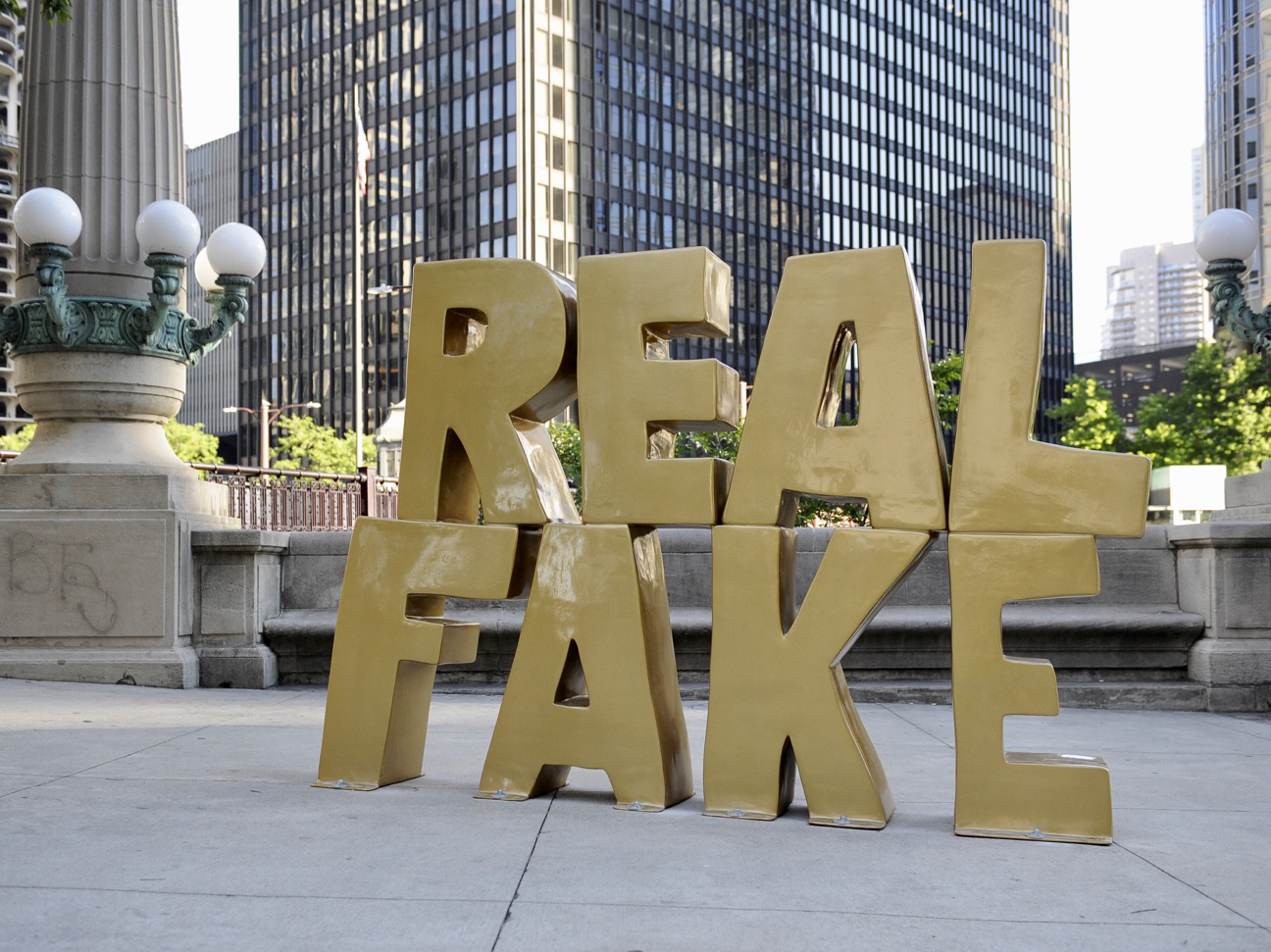
The Truth about Authenticity


While fake news is often hard to spot, phony advertising, inauthentic companies, and fake people aren’t.

I was listening to my favorite podcast the other day and I heard it. I wasn’t listening for it, but it was obvious. Commercials on podcasts usually involve the host telling you how great a product or service is. It’s typically something they have used personally and they give you their own perspective. It’s almost like an endorsement, so advertisers normally give the host freedom to ad-lib. The result is an advertising segment that seems genuine and authentic.

That’s why it stood out to me when the host of the podcast read this advertisement segment verbatim. It was for the new Toyota CH-R. The ad seemed like it was written by a high-priced Madison Avenue firm. Every word was carefully selected, the message was perfectly crafted, and it was likely focus-tested to provoke a picture-perfect response. The host even read the flawless, well-written legal disclaimer at the end. To me, it sounded phony.

In the podcast world of personal-endorsement-style advertisements, this one felt fake. It didn’t seem truthful or genuine. It was over-produced, over-engineered, and too perfect. It wasn’t real.

“There’s authenticity in a first take.” Mike Rowe

Mike Rowe of Dirty Jobs fame would agree. He made a living off being “authentic.” He said, “Dirty Jobs didn’t resonate because the host was incredibly charming. It wasn’t a hit because it was gross, or irreverent, or funny, or silly, or smart, or terribly clever. Dirty Jobs succeeded because it was authentic.” The show was the first of its kind. There was no script, no rehearsal, and only one take. They turned the cameras on and Mike responded and reacted to his environment. It was genuine and people loved it.

“I believe the enemies of charm are deliberateness in much the same way I would argue that the enemies of authenticity are production.” Mike Rowe

Companies can also be inauthentic when they aren’t true to their message. Think about Subway restaurants. They’ve used the advertising slogan, “Eat Fresh,” since 2002. They came under fire when it was discovered they used azodicarbonamide in their bread as a conditioner. Food blogger Vani Hari, of the popular food blog Food Babe, originally drew public attention to this issue. She revealed that azodicarbonamide was the same chemical used in yoga mats and shoe rubber. In 2014, after public pressure grew, Subway stopped using the chemical in their bread recipes.

But the damage to Subway was done. Subway’s sales fell. They lost 3% in 2014, despite opening 778 new stores. They faced eroding public perception regarding the quality of their food while still using the “Eat Fresh” slogan. The main reason they lost consumer confidence was because they were seen as phony and inauthentic. You can’t claim “Eat Fresh” and use a yoga mat chemical in your bread.

People can be fake as well. People who make promises with no intention to keep them, those that make friendships only for personal gain, or those that have hidden agendas are seen as shallow and phony. You can probably name people with these qualities where you work. They can be successful in the short term but only until people learn their true character. Then, no one wants to work with them.

“People with good intentions make promises, but people with good character keep them.” Anonymous

In a world where we are surrounded by phony people and messages, how can we be more authentic? Let me suggest three things.

Be true to the first take. Avoid over-processing and over-engineering your message. A product training video, for example, that has a few mistakes seems more real than one that has been carefully edited. A quick, witty tweet delivered at the right time will get more attention than a perfectly polished post. We are bombarded daily with highly-engineered, focus-group tested messages. An honest first-take is refreshing and seems more authentic.

Be true to your company promise. What does your company stand for? What is the brand promise? Whatever it is, make sure you are delivering to that promise. If you commit to 24 hour deliveries, make sure you are built for speed. If you promise the “lowest prices,” make sure you know that’s true. If you claim “eat fresh,” then know what’s in your recipes. Being true to your brand promise will make you appear more authentic.

Be true to others. Nobody wants a fake friend. Be real. If you make a promise, deliver on it. Build relationships based on mutual respect not hidden agendas and personal gain. Be there for people in the good times as well as the bad. Put others ahead of yourself. Don’t talk behind their backs. Show respect for everyone on your team. Being true to others and being a person of character will make you more authentic.

Let’s get rid of fake news and, while we’re at it, let’s get rid of phony advertising, untruthful companies, and fake people. Authenticity is rare. We will stand out if we embrace reality and stop being so over-engineered on fake. Embrace your genuine self, be original, and see what happens. It certainly worked for Mike Rowe.

What do you think? Does authenticity stand a chance today? Are there other reasons why “Dirty Jobs” had such mass appeal? How can we employ authenticity in our messaging? What are some other examples of authentic or inauthentic companies? What was the result? Let me know in the comment section below.

Belichick on Bringing your Team Back to Earth

Belichick

Celebrating success and honoring achievement is an important aspect of leadership but, if you want to be successful over the long run, you can’t spend too much time resting on your laurels.

Bill Belichick, arguably the best football coach in NFL history, knows this first hand. The day after his team celebrated their latest Super Bowl win with an extravagant party where the players received their Super Bowl rings, he made it very clear the party was over.

“You know, we’ve had enough parades, enough celebrations and enough everything. This 2017 team hasn’t done anything yet — none of us have. We really need to focus on what we’re doing this year. There have been a lot of great moments in the past, which is great, but that isn’t going to help us this year.”  Bill Belichick

Acknowledging the success of the past and ensuring your team understands the realities of the present is a critical leadership skill to master after a big win. Landing that big order was great but you need to meet the customer’s expectations now and in the future.

What do you think? Is it possible to let winning go to your head? Is Belichick right to close the chapter on the past and set expectations for the future? Do you know of companies or organizations who rested too long on their achievements? Let me know in the comment section below.

The Bleeding Edge: When Innovation Fails

11009362 - bomb

In 2002, in the early days of Bluetooth, I toured the Bosch white goods factory in Germany. They presented to us their concept of the washing machine of the future which had Bluetooth connectivity. The idea was that your washing machine could communicate with your cell phone and you could control its activities.

I remember thinking at the time, what problem are they trying to solve? Who needs this technology? My washing machine buzzes when it’s done. That’s all I need. I don’t really want my appliances texting and calling me in the middle of the night with all their problems. To Bosch’s credit, I don’t think they ever commercialized the concept.

Fast forward to 2017, Samsung is now widely advertising their new FlexWash and FlexDry Laundry System. According to the ads, these Wi-Fi-enabled appliances will allow you to start and stop the units remotely with your smartphone as well as monitor the progress of each cycle. CNET calls it, “the wackiest innovation we’ve seen yet.” My reaction is pretty much the same as it was in 2002. The question I continue to ask is, who is looking for this kind of technology in their washer and dryer?

Don’t get me wrong, I love technology. I’m an engineer. By law, I’m required to get excited about the latest gadgets. I’ve also served as an R&D manager several times in my career. What I don’t like is new technology that doesn’t make things better or easier. What the Samsung case reveals, in my opinion, is the dark side of innovation, what I like to call, “The Bleeding Edge.”

Maybe Samsung will be wildly successful with their new washer and dryer, but I don’t think so. In my view, they are heading toward the bleeding edge which is characterized by three main failures:

  • Innovation that fails to solve a problem.
  • Innovation that fails to make money.
  • Innovation that is ahead or behind market demand.

Let’s look at these three points:

Innovation that fails to solve a problem. Einstein is credited with saying, “if you can’t explain it simply, you don’t understand it well enough.” I think innovation is similar. If you can’t easily explain how it helps the end user, it probably won’t. Take the example of a toilet brush with a flushable head. It’s not hard to understand how this helps make cleaning a toilet easier. It solves a problem. The value of controlling a washing machine remotely is a little harder to explain. Just because you can create technology doesn’t mean you should.

Innovation that fails to make money. Unless you operate a charity, the goal of a business is to make money. Even if you create an innovation that solves a problem, if you can’t make money selling it, you have also failed. Look at the Segway. It’s an amazing innovation but it took 7 years to sell just 30,000 units which was far less than its first-year sales goal. And even with the high price tag, Segway is still not profitable. Like it or not, customers will place a perceived value on your technology. If your perceived value is low and your cost is high, you won’t be making very much money.

Innovation that is ahead or behind the market demand. Timing is everything. This is especially true for innovations. Being “ahead of your time” is just as bad as being behind. I learned this lesson the hard way during the so-called Smart Grid revolution. We had the right technology that solved a major problem on the grid and we could make money selling it. The problem was the market wasn’t ready. Instead of embracing these new solutions, electric utilities took a more cautious and conservative approach. They experimented with pilot projects around the country but they never purchased the technology in the volumes predicted by the experts. The market just wasn’t ready to embrace this change.

Innovation is great but there is a dark side that needs to be avoided as well. Developing a new technology that fails to solve a problem, fails to make money, or misses the market demand can cost companies millions in profit. Just because it’s possible to do something, doesn’t mean you should. Innovations need to be carefully planned and executed to ensure business success.

What do you think? What am I missing? Is Wi-Fi the future of laundry? Is this just part of the IoT revolution that will make a huge improvement in people’s lives? Have you personally experienced the “Bleeding Edge” of technology? What was that like? Let me know in the comment section below.