Breaking Away from Big Brands

I recently had an experience staying in a $68 a night hotel that was remarkable. I was helping my son move and I just need a place to crash for the night. The cheapest hotel in the area was a brand I had never heard of but, it had decent reviews, so I booked it. I didn’t expect much but what I experienced was amazing. The staff was friendly. The lobby was open and airy. The room was clean and spacious. The $68 rate even included a hot breakfast. I was blown away by the value.

This experience made me think about how brands affect our buying decisions. When I travel on business, I mostly stay in big brand hotels. I try to find the best rates but I also want a hotel that is going to be clean and safe. I don’t want to risk having a bad night in a terrible hotel. There is comfort in choosing a big brand but this method isn’t foolproof. Like most business travelers, I can tell you countless stories of bad hotels with rude staffs, dirty rooms, and terrible conditions. It turns out that the name on the outside of the hotel doesn’t always guarantee the quality inside.

So, why do we tend to choose known brands over lesser known brands in our buying decisions? I think there are three main reasons:

Comfort and speed. We’re busy. When making purchasing decisions, we don’t want to spend a lot of time looking at all the various options and information available to us. We recall past purchases and recent advertisements to identify the best choice. Big brands are comfortable because they are known to us. We have heard of them or have had past experiences with them. For speed, we choose the known over the unknown.

Identification. Brands affect our identity. Often times, we choose brands that we want to be associated with. Driving a Ford pickup, wearing Levi jeans, or owning a Gucci purse all say something about us. We will also choose brands that are accepted in our peer groups. A serious weightlifter, for example, wouldn’t show up at the gym in Polo sneakers. We choose brands for identification.

Risk. Often times the risk of a poor purchasing decision outweighs the potential benefits. We choose the big brand because we think it is a safer choice. When you see the McDonald’s sign when pulling off the highway looking for a meal, you know what to expect. You might skip a restaurant called Big Jim’s Burger Joint because you have no idea what it will be like. What if the food is bad or you get sick? Even though Big Jim probably makes a better burger than McDonald’s, the risk outweighs the potential benefits.

The problem with choosing big brands is that we miss out on the opportunity to explore something that is unknown. We miss out on an experience that is either simply amazing or so bad that you will be telling stories to your friends for years. Choosing big brands is often the safe choice but it’s also the most boring and unremarkable one. And who wants to live a boring and unremarkable life?

If you want to break free of the comfort of big brands but are afraid, here three things you can do to help make the shift:

Listen to what others saying. With Yelp, Trip Advisor, Amazon, and most websites, you can explore what others are saying about unknown or lesser known brands you are considering. Listening to others can help reduce the anxiety of your decision. There is comfort in knowing others have gone before you.

Use time as an advantage. The higher the price of a buying decision, the more risk is associated with it. However, these decisions typically take longer, allowing more time to research the best solution. Take the time to do your homework. Look for all the alternatives both known and lesser known. Evaluate them all. Your best solution may not be the big brand. If a decision is for a lower priced service or product, take a chance on the lesser known brand since the risk is low. You may be amazed at your experience.

Look beyond price. Often times, lesser known brands offer more features and benefits than the big brands. I was once asked by a potential customer why he should buy from my company versus one of my largest competitors. My answer was simple, we ship in 24 hours. The big brands all had lead times of 6-8 weeks. The customer switched because speed was important to him.

The small business advantage. Many times, the lesser known brand is a small business working hard to earn your money. Instead of spending time in corporate meetings, small business leaders spend time with customers learning what they like and dislike. They are constantly adjusting their business model to please customers and attract more business. To them, it is personal. Show them some love and give them your business. You may become a lifelong customer.

Breaking away from big brands means departing your comfort zone and choosing an unpredictable outcome. Most likely the experience will be positive especially if you have the time to research the best solution. Regardless, it gives you the chance to explore something that is unknown. So, step away from the boring and predictable and enjoy the experience!

“Two roads diverged in a wood, and I took the one less traveled by, And that has made all the difference.” Robert Frost

The Truth about Chasing Down a Dream

For several weeks, orders were unusually low. Our growth seemed to be stalled. I was getting nervous. I was starting to think our business had plateaued. Then, on a quiet Friday afternoon, I opened an e-mail that changed everything. It was the largest order we had ever received and it came from a customer we had been pursuing for months. It was a great day.

Some days, everything seems to go your way. All of your hard work pays off. You are on top of the world. You get that big order. You land that new customer. You reach a new milestone in your business or in your training. You make giant strides towards your goal. Your dream is becoming a reality. These are the best days.

The truth is, when you are chasing a dream, a vast majority of days will not be like this. A good day is an exception. If you are a leader, an entrepreneur, if you are trying to better yourself or challenge the status quo, most days will be difficult and progress will be slow. You will be frustrated and want to quit.

This is normal.

The problem is we expect success to be easy because we are exposed to successes all around us. It seems like everyone on the news and on social media is winning. Everyone is beautiful, thin, young and wealthy. Everyone is reaching their dreams with hardly any effort. No one else seems to be struggling as much as you are.

This is all a lie.

Chasing down a dream is hard and everyone who sets difficult goals will struggle. Most days will be tough and growth will be slow. Only those with grit and determination will achieve their goals. The key is to stay motivated during those long days when progress is slow.

To overcome the frustration and worry, try these five things to keep you motivated:

Take time and reflect on how far you’ve come. Change your perspective. Instead of looking at how far away your goal is or how successful others are, look at yourself. Where were you six months ago or a year ago? How far have you come? How much progress have you made towards your goal? Often times, seeing your progress helps to change your outlook.

Celebrate milestones. One of the best ways to accomplish a big goal is to break it down into smaller goals. This is something that Jon Acuff recommends in his book, Finish: Give Yourself the Gift of Done. He says to “cut your goal in half” and then celebrate hitting these milestones. This will give you a chance to regroup and refocus towards the next milestone.

Ignore the noise and focus on your own work. It’s easy to get discouraged by seeing others succeed or by listening to naysayers. I once had a potential partner tell me that starting a company in this industry was “impossible.” Comments like this can derail your motivation. It’s far better to ignore the noise and focus on taking action to get you to the next level.

Embrace the suck. This is a common military expression that is perfect when you are facing tough times. It simply means that you should consciously accept the hard times because, although unpleasant, they are necessary and unavoidable. In other words, this isn’t easy but let’s deal with it. Tough times aren’t fun but they make you better and stronger. So, don’t fight it, embrace it.

Start fresh daily. Every day is a new day to start fresh. I often tell my team, “we have money in the bank and air in our lungs, it’s a good day, let’s get after it.” Regardless of what happened yesterday, last week or last month, today could be the day that you get a breakthrough. You can’t create good luck but you can work hard and be prepared when the opportunities arrive.

When you’re chasing a dream, a vast majority of days will be tough and progress will always seem slower than you expect. With hard work, grit and determination, you can reach your goals. These five techniques can help you stay motivated as you continue on your journey.

{Photo Credit: Mari Armstrong}

Death of a Business: The Problem with Choosing the Wrong Strategy

“The essence of strategy is choosing what not to do.” Michael Porter

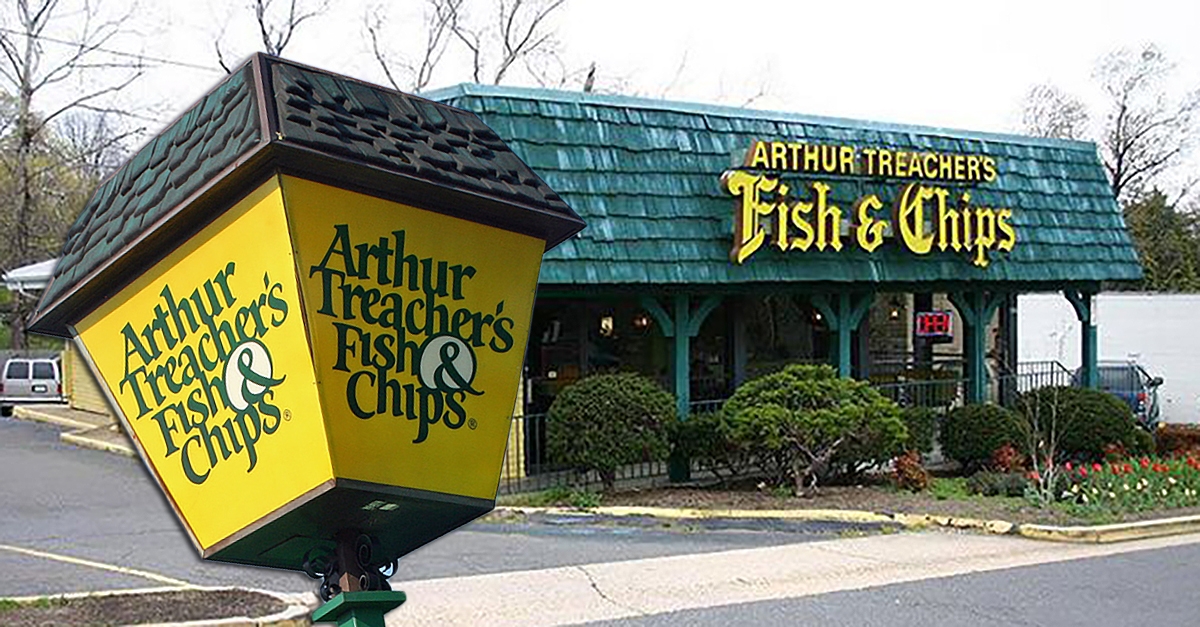
When I was a kid in the 1970s there was only one place to go for good fast-food fish and chips. And you didn’t have to go far to find it. Arthur Treacher’s Fish & Chips had more than 820 restaurants across the country in the mid-70s. They were one of the great fast-food success stories and offered a tasty alternative to the burger chains.

I was thinking about them the other day. I realized I hadn’t seen one of their restaurants in years. I wondered what ever happened to them. Thanks to Google, I found an interesting article which described their fate.

The article explains a perfect storm of events that hit Arthur Treacher’s in the late 1970s: There was intense competition with other fast-food chains and the price of cod had skyrocketed due to a fishing dispute between Iceland and Great Britain.

The company was sold to Mrs. Paul’s Seafood in 1979 and that’s when the problems magnified. In order to stay competitive, executives at Mrs. Paul’s Seafood decided to replace cod with a less expensive fish, pollock. This one decision marked the beginning of the end of the company.

To be fair, many types of fish are used to make fish and chips, but the most popular fish used in traditional British fish and chips is cod. More than 60% of all fish and chip meals sold in the UK feature cod. Americans like their cod as well and they didn’t like the change at Arthur Treacher’s.

Throughout the 1980s, Arthur Treacher’s lost many loyal customers, went through several owners and quickly lost ground to competitors. Before long, hundreds of locations were shut down. Today, there are just seven stores, with only four operating exclusively as Arthur Treacher’s.

“However beautiful the strategy, you should occasionally look at the results” Winston Churchill

How do you take a successful restaurant chain from more than 820 locations to only 7 in less than a decade? You choose the wrong strategy.

When businesses are faced with challenges, like Arthur Treacher’s in the late 70s, they need to act quickly. Management often looks for a swift and simple solution. On paper, the idea of replacing cod with pollock seemed to make sense. The company would save money and no one would know the difference. The problem was that customers did know and they didn’t like the change.

What made Arthur Treacher’s special was the authentic taste of cod in their fish and chips. Removing that took away the company’s uniqueness. Implementing the cost-cutting strategy actually stripped away their competitive advantage.

In 1985, Harvard Business School professor Michael Porter wrote the popular business book, Competitive Advantage: Creating and Sustaining Superior Performance. There, Porter outlined the three primary ways companies can achieve a sustainable advantage. They are cost leadership, differentiation and focus. Cost leadership means you provide reasonable value at a lower price. Differentiation means you deliver better benefits than anyone else. Focus means you understand and service your target market better than anyone else.

Executives at Mrs. Paul’s Seafood chose cost leadership as a strategy when they should have considered differentiation or focus. They had a business model that was already different and special. They had a loyal customer base that liked their product. There was room in the market for an alternative to the burger chains. They chose the wrong strategy which led to the rapid decline of this once popular brand.

As a business leader, you will be faced with many similar challenges. When competitors are lowering prices, your first reaction may be to match their actions to try and take over the cost leadership position. But that isn’t the only answer.

Porter shows us there are other ways to compete and maintain a competitive advantage as well. Like Arthur Treacher’s, our businesses are unique and special. We can leverage that uniqueness to deliver better benefits than anyone else with a differentiation strategy or we can service our target customers better than anyone else with a focus strategy. In the end, it is important to look at all possible solutions to choose the right strategy. Choosing the wrong strategy can have deadly consequences.


If you liked this post, you’ll love my new book, All in the Same Boat: Lead Your Organization Like a Nuclear Submariner.

You can find it HERE or on Amazon.